


News

MEMS Ultrasonic Sensor will be exhibited at the Consumer Electronics Show (CES) in Las Vegas, USA.
Consumer Electronics Show (CES)
Dates: January 6–9, 2026
Location: Las Vegas, USA
Booth Number: North Hall 10529
The automotive industry is increasingly focused on enhancing in-cabin safety, comfort, and intelligence. MEMS ultrasonic sensors, with their revolutionary miniaturization and ultra-low power consumption, are emerging as a pivotal technology for next-generation occupancy monitoring and intrusion detection systems.
Overcoming Size and Power Barriers
Traditional ultrasonic sensors, due to their bulk and high power demands, faced significant integration challenges within the confined, electronics-dense space of a vehicle cabin. MEMS ultrasonic sensors shatter these limitations. Under equivalent performance conditions, they occupy a mere 1/1000 of the volume and consume approximately 1% of the power of their conventional counterparts. This dramatic reduction enables their seamless and discreet integration into headliners, pillars, consoles, or seats without compromising design aesthetics or vehicle weight.
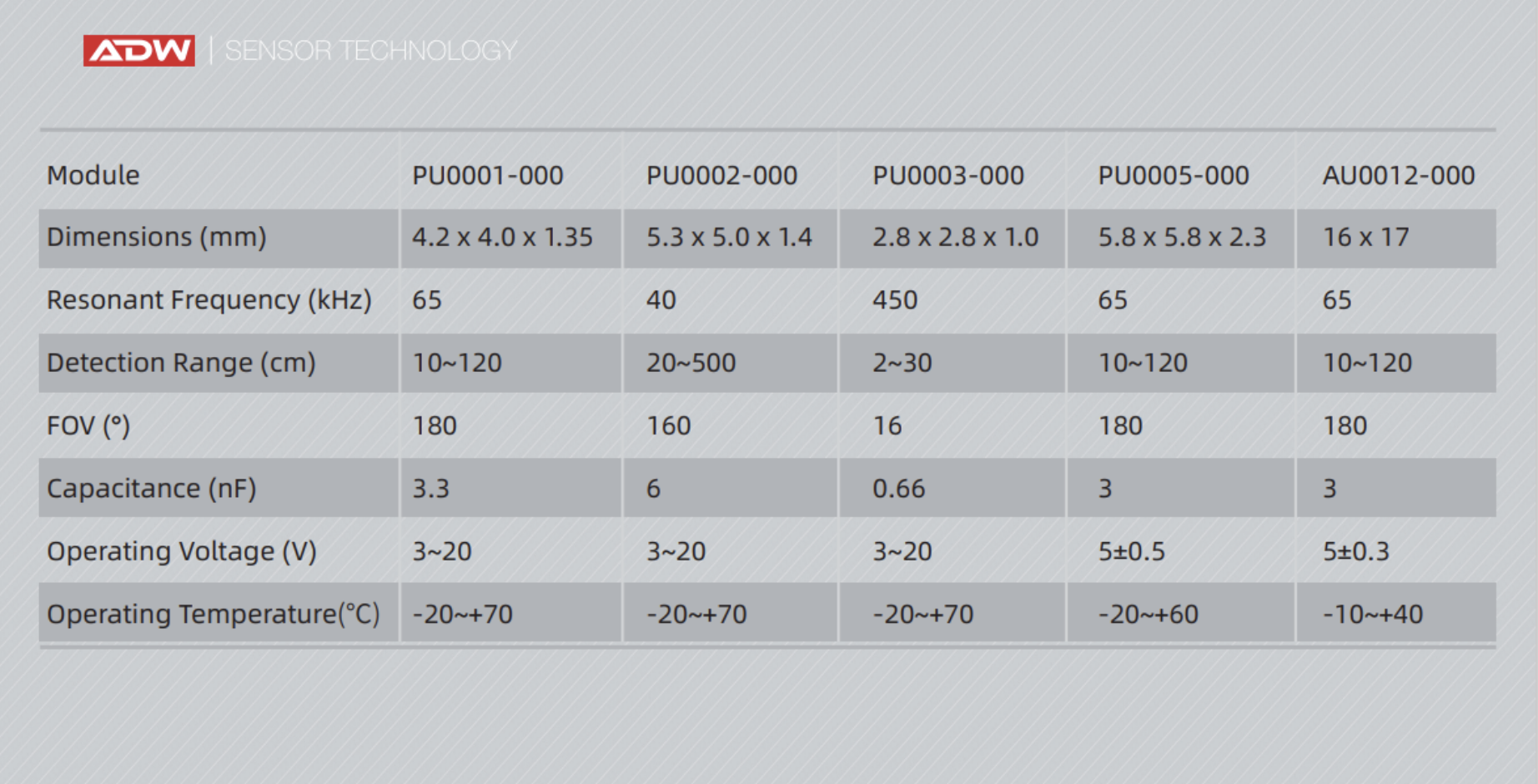
Enabling Smarter, More Reliable Cabin Monitoring
The core advantage lies in their ability to provide persistent, high-fidelity sensing. By leveraging this technology, automotive manufacturers can deploy robust systems for critical safety functions:
Child Presence Detection (CPD): Reliably detecting a sleeping child or pet left unattended in a vehicle, triggering alerts to prevent tragic heatstroke incidents.
Intrusion Detection and Anti-Theft: Monitoring cabin volume with high sensitivity to detect unauthorized entry or movement, activating alarms even before a window is fully breached.
Occupancy Status Classification: Precisely determining seat occupancy (empty, adult, child, object) for optimized airbag deployment strategies and personalized comfort system adjustments.
Gesture Recognition: Supporting touchless control of infotainment or lighting systems through precise, low-power gesture sensing.

Technology Breakthrough and Integration
The successful deployment of these capabilities hinges on overcoming material integration challenges. ADW, by mastering the integration of PZT thin-film materials within advanced MEMS processes, has developed next-generation ultrasonic sensor chips, modules, and complete system solutions. This breakthrough ensures the sensors deliver the required acoustic performance, reliability, and durability to meet stringent automotive-grade qualifications, all while being compatible with high-volume manufacturing.
Conclusion
MEMS ultrasonic sensors are transforming the automotive cabin from a passive space into an intelligently aware environment. Their miniaturized form factor, negligible power footprint, and high performance make them the ideal sensing modality for enabling life-saving safety features, enhanced security, and intuitive user interactions, paving the way for safer and smarter mobility.
 Come Back