


News

Smart glasses, as a representative of modern innovation, are driving a new wave of technological transformation. One of the key reasons behind their rapid advancement lies in the integration of various cutting-edge sensors. These sensors enable smart glasses to perform diverse functions and adapt to different usage scenarios. This article explores the types of sensors used in smart glasses and the technological breakthroughs they bring.
Core Components of Smart Glasses & Types of Sensors
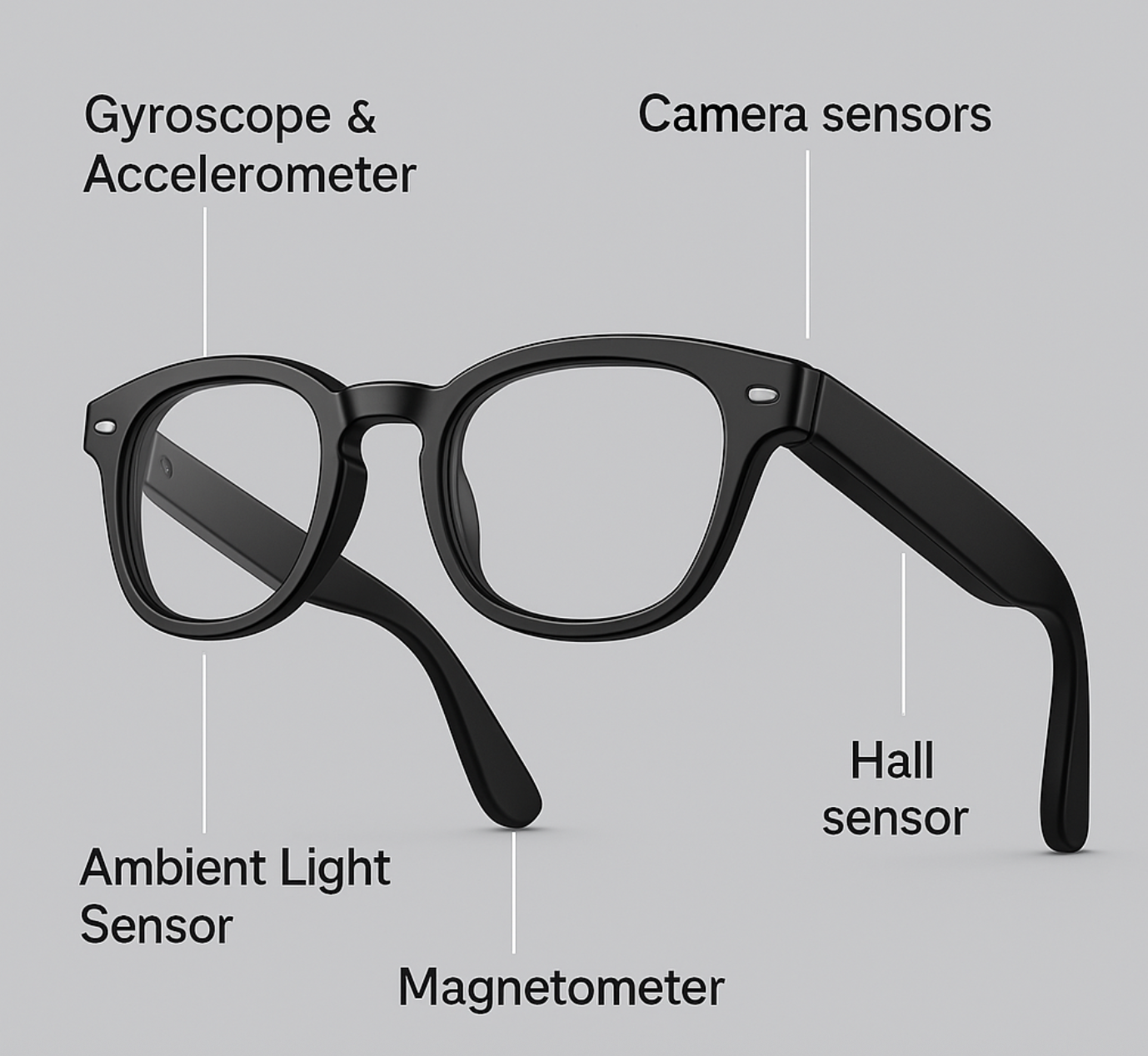
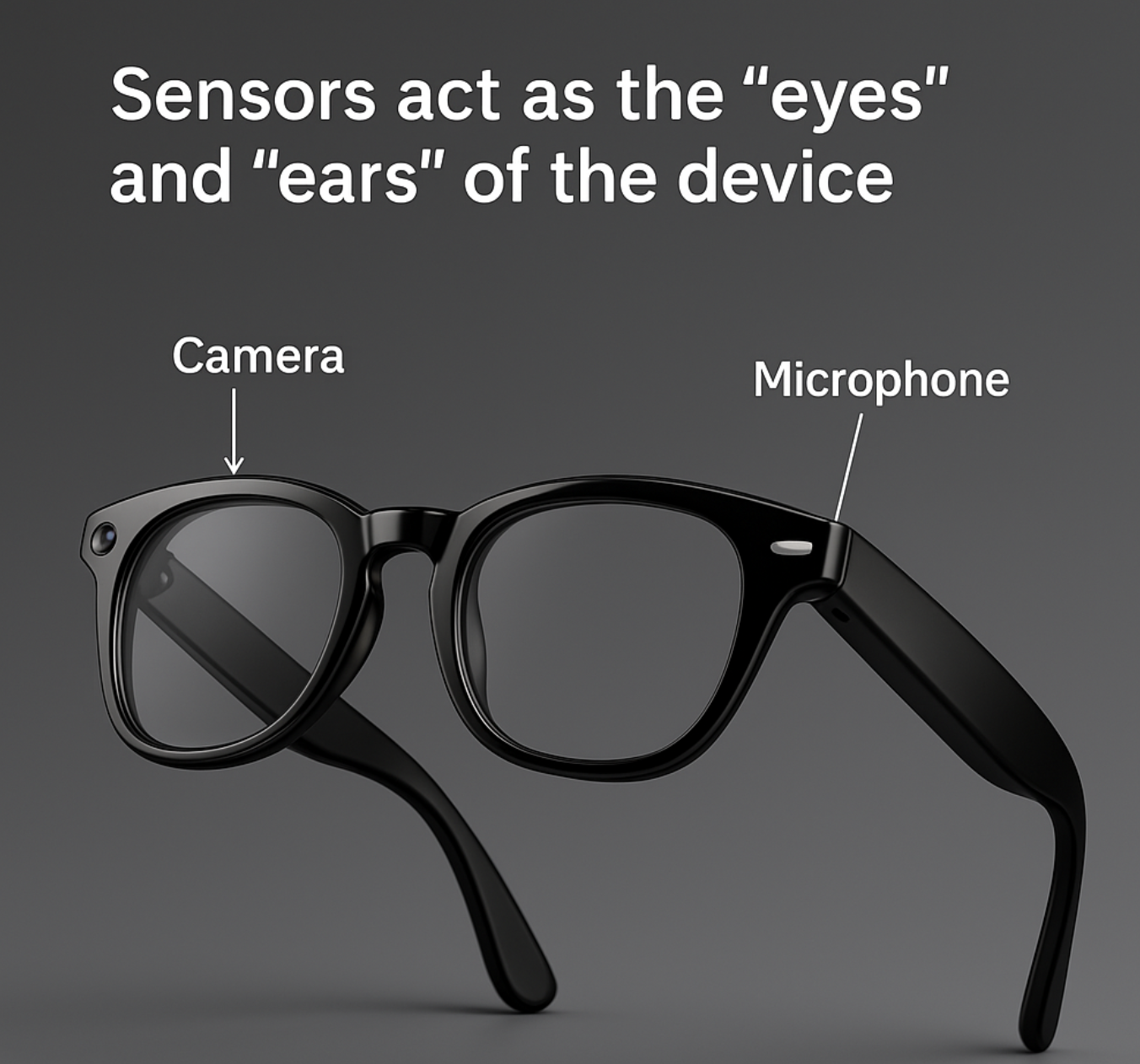
Smart glasses generally consist of a display module, camera system, optical components, sensors, and processing chips. Among them, sensors act as the “eyes” and “ears” of the device, playing an essential role in perception and interaction. Common sensors used in smart glasses include:
• Camera Sensors
Used to capture photos and videos, enabling visual recording and real-time image processing. High-end smart glasses may incorporate high-resolution cameras, wide-angle lenses, or depth-sensing modules to enhance image quality and field of view.
• Gyroscope & Accelerometer
These sensors detect head movement, orientation, and acceleration. They support head-tracking, gesture recognition, and motion-based controls, enabling smooth and intuitive interaction.
• Magnetometer
By detecting the strength and direction of the Earth’s magnetic field, the magnetometer helps determine orientation and supports accurate navigation and positioning features.
• Ambient Light Sensor
This sensor measures environmental lighting conditions and automatically adjusts the brightness and contrast of the display, enhancing visual comfort and extending battery life.
• Proximity Sensor
Used to detect the distance between objects and the glasses, enabling features such as automatic screen on/off, wear detection, and energy-saving functions.
• Hall Sensor
A magnetic field detector commonly used for detecting frame opening/closing, touch interactions, and other smart functions. It enhances the safety and responsiveness of the device.
To be continued....
 Come Back